Press Release
October 06, 2026
Isuzu and UD Trucks to exhibit at JAPAN MOBILITY SHOW BIZWEEK 2026
Read More
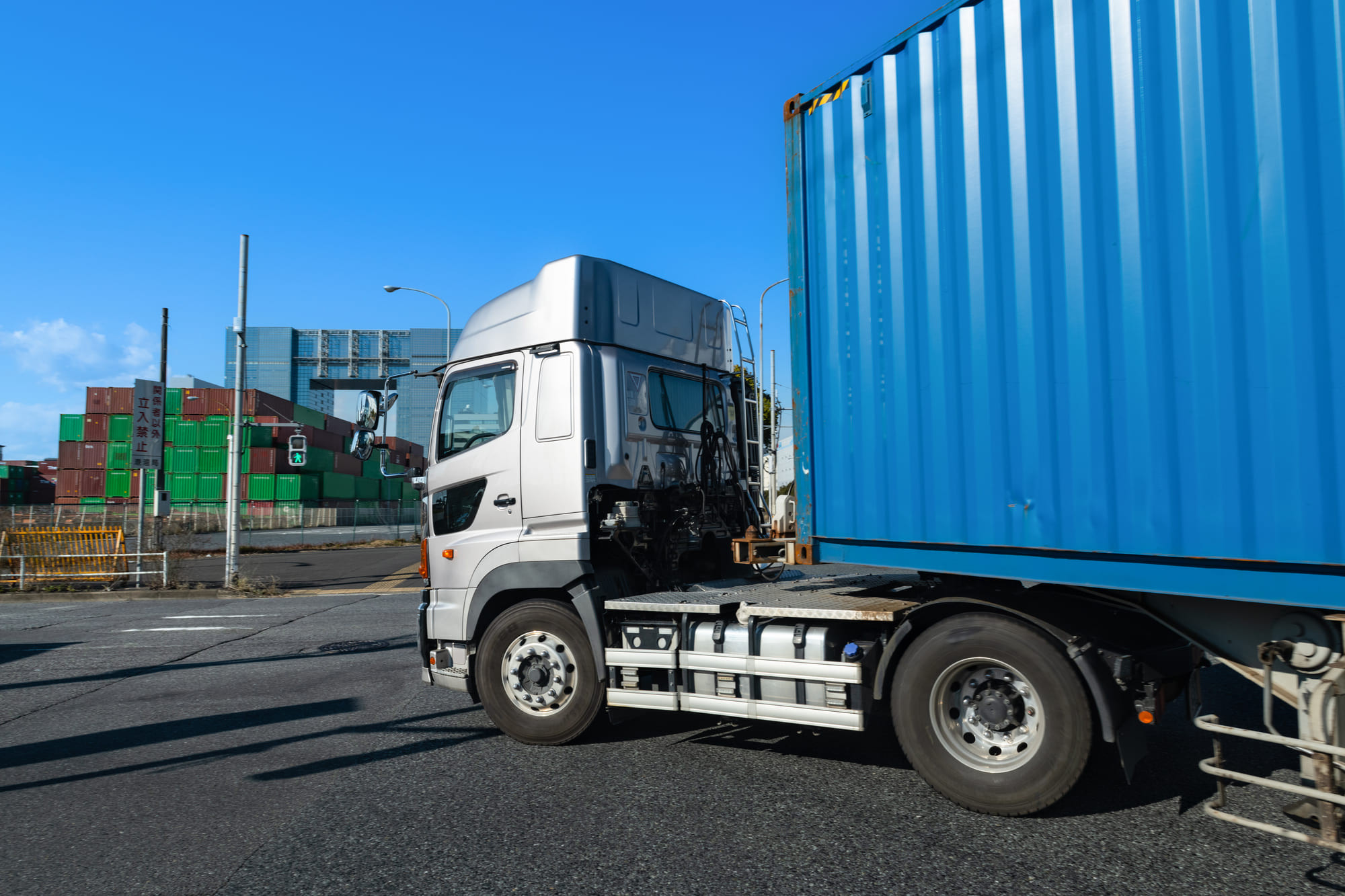
Container transport by heavy duty trucks relies on land transport that connects ports and inland areas, known as drayage. A well-structured drayage operation helps reduce delays and dispatch errors that often result from unclear delivery terms, mismatched return timing, and incomplete information, while improving overall operational reliability.
This article outlines the definition and types of drayage, its role within the logistics chain, and the structure of tractors and chassis that support daily operations. Understanding this framework supports accurate dispatching and helps build safer, more consistent operations.
Container drayage by heavy duty trucks refers to transport that connects ports, rail terminals, and inland depots, and it is generally called drayage. The primary use is short-distance transport conducted within a radius of 50 to 100 km from a port or rail terminal. The most common pattern is port drayage that links ports and inland areas. Rail drayage that links rail terminals and inland areas also plays an important role.
Container transport does not function through ocean transport alone. It becomes complete only with drayage that connects ports and inland logistics bases. Drayage is short-distance, port-based transport that moves containers from a port container yard to warehouses, factories, and rail terminals, or in the opposite direction. It serves as the connecting process that links ocean transport and inland transport.
Although the distance is relatively short, drayage is affected by multiple constraints, including vessel arrival and departure schedules, yard congestion, customs and gate processing, chassis availability, and driver capacity. When delays occur, they tend to propagate to subsequent processes, including line haul transport, warehouse operations, and delivery plans. In other words, drayage should be viewed not as simple carriage before and after ocean transport, but as a process that directly influences the performance of the entire logistics chain.
<Logistics flow>
1. Ocean transport (line haul): long-distance transport by container ships
2. Port handling: unloading and loading of containers at the port and temporary storage in the yard
3. Drayage (land transport): container transport by heavy duty trucks between ports and inland warehouses or factories
4. Inland delivery: delivery to the final destination
In drayage, it is important to clearly identify not only the section where the truck carries loaded cargo but also the return destination for empty containers after unloading. This clarity supports stable operations and practical cost control.
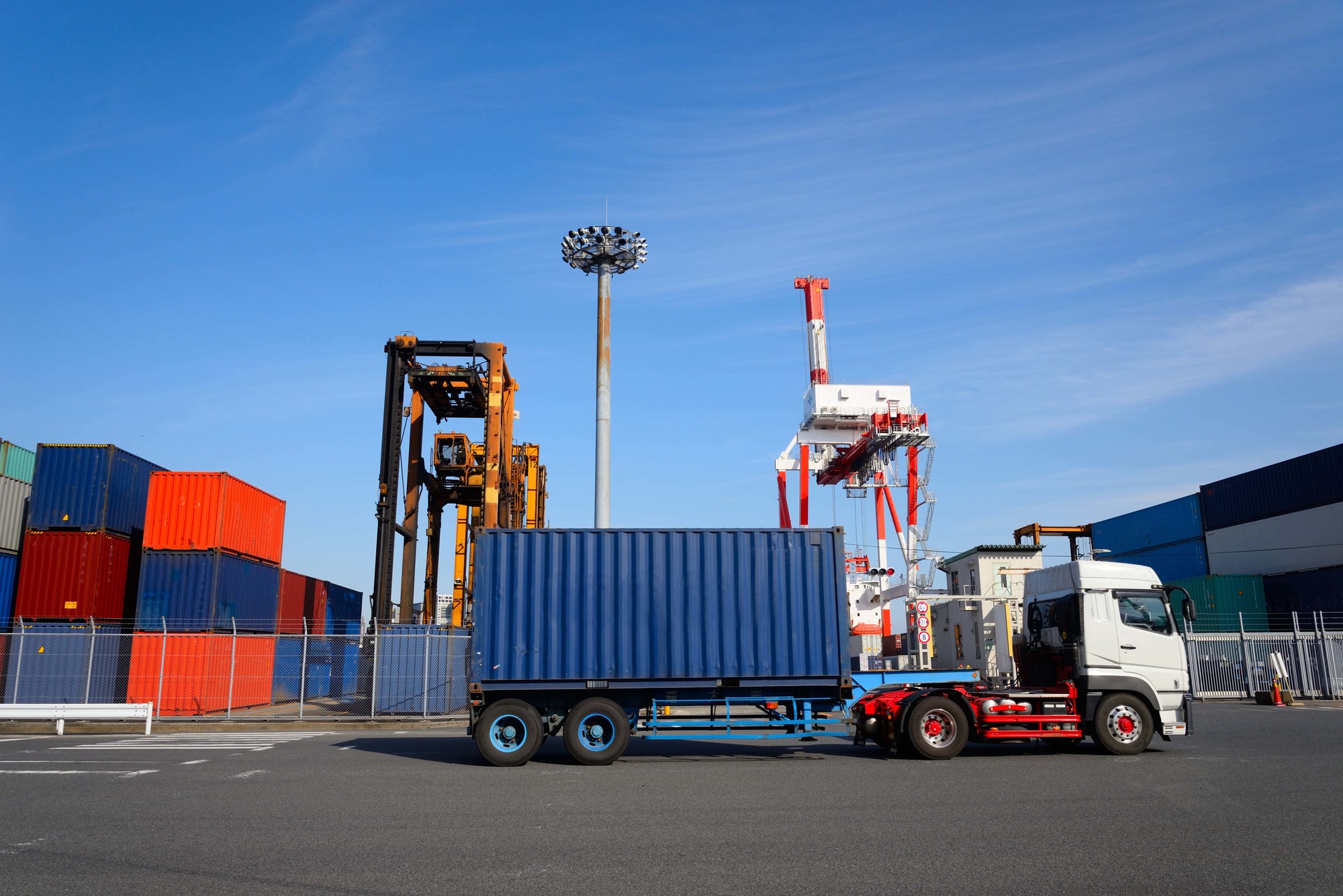
To manage drayage efficiently, it is essential to understand the vehicle configuration in use. Unlike integrated-body trucks, container transport uses a configuration in which the tractor that provides traction and the chassis that carries the container are separated. Understanding this structure is a practical starting point for improving operating efficiency and managing total operating costs.
This section explains the specific roles of tractors and chassis, the differences from platform trucks, the constraints created by container sizes, and the handling of loaded and empty containers.
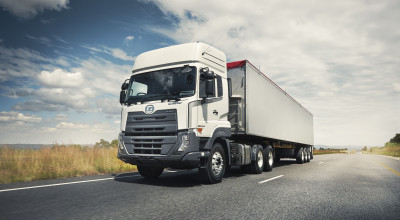
The most significant difference between container transport by heavy duty trucks and general truck transport is that the vehicle is separated into a tractor and a chassis.
The tractor is a self-propelled towing vehicle that provides propulsion and braking. The chassis is a dedicated trailer used to carry and secure the container. Unlike integrated-body trucks, container transport incorporates processes defined by handover terms and return terms for the container. This structure also enables flexible operations, including uncoupling the tractor from the chassis during cargo handling and assigning the tractor to another task.
Container transport is conducted by loading containers onto a chassis. The required chassis type and route handling conditions vary depending on container size.
Common container sizes include 20 ft, 40 ft, and high cube (HC).
■ Container sizes and points to note
Container size | Points to note |
20ft | Pay attention to axle load limits that restrict the weight per axle. |
40ft | Overall length is greater, so it is necessary to confirm turning feasibility at intersections during urban operations. |
High cube (HC) | Overall height is greater, so it is necessary to pay attention to height limits at tunnels, elevated structures, and warehouse entrances. |
Operational considerations differ between loaded containers that carry cargo and empty containers.
<Differences between loaded containers and empty containers>
Loaded containers: Higher weight increases braking distance and requires attention during cornering.
Empty containers: Very low weight makes vehicle behavior more sensitive to crosswinds during travel.
These differences affect not only operation planning and safety management but also the drayage-specific process of returning empty containers. For this reason, they should be managed as distinct categories.
To arrange drayage smoothly, advance information preparation is essential. If arrangements proceed with unresolved information, this can lead to on-site rejections, waiting time, and additional charges, directly increasing operational and cost risk. The following five items, which are the minimum required for dispatch planning by drayage operators, should be finalized in advance.
<Five items to confirm before arranging drayage>
Pickup location of the container, including port name, terminal name, and address, and the return destination, including the empty container return location, deadline, and receiving hours
Delivery destination, including the exact address, cargo handling conditions, and arrival time
Information on container size, weight, and container number
Whether the container is loaded or empty, including the presence of cargo and return obligation
Communication framework, including the responsible contact person and contact method
If any of this information remains unresolved, a drayage operator cannot finalize dispatch planning. In addition, it is important to understand in advance the risks of additional charges, including seal integrity requirements during transport and detention charges that arise when returns are delayed. This preparation is essential for preventing operational issues.
Drayage by heavy duty trucks is subject to stricter operating constraints than general freight vehicles due to vehicle size and weight. To achieve safe and compliant operations, it is necessary to understand dimensional limits, weight limits, and management conditions that depend on cargo characteristics.
This section explains route constraints based on road infrastructure and management considerations for special cargo.
In drayage, vehicle size and weight are the primary factors that determine available routes. Route restrictions set by each country or region are mainly as follows.
■ Route restrictions by country or region
Item | Japan | Europe (EU) | United States |
Vehicle dimension limits | 3.8 m, or 4.1 m on designated roads | Height 4.0 m, width 2.55 m, length 16.5 m for semi-trailers | Approximately height 4.1 m and width 2.6 m, with differences by state |
Weight and axle load limits | Gross weight up to 20 t, or 25 ton expressways and designated roads, and axle load up to 10 t | Gross weight 40 to 44 t and axle load 11.5 t | In principle 80,000 pounds, approximately 36 t, with differences by state |
Special vehicle permits | Permit required when exceeding general limits, operated under road traffic law | Permit required when exceeding EU directive standards, operated by national authorities | Permit required when exceeding state standards, operated by each state |
Tunnels and underpasses have individual height limits, so special attention is required when carrying high cube containers.
When permits are issued, routes, time windows, and speeds are specified. Ignoring these conditions leads directly to accidents and violations. For this reason, it is essential to conduct route surveys in advance and prepare alternatives when a route is not available, as part of compliant and safe operations.
In drayage by heavy duty trucks, cargo characteristics require compliance not only with domestic laws but also with international rules and the operation of specific equipment.
When transporting hazardous materials, compliance is required with regulations based on fire service law, road vehicle law, and poison and deleterious substances control law. This includes preparing the required documents, displaying markings on the vehicle, and observing route restrictions.
When handling refrigerated or frozen cargo in reefer containers, continuous power supply during transport is required, along with consistent temperature control and advance pre-cooling checks. For high-value cargo, including precision equipment and branded goods, security measures are required, including GPS tracking, escort arrangements, and dedicated insurance coverage.
If confirmation of these special conditions is delayed, the necessary equipment or qualified staff may not be available on the day of transport. In the worst case, transport itself may be halted, causing significant disruption to schedules, operations, and customer commitments. For this reason, sharing detailed cargo information and finalizing conditions at an early stage of arrangement is a prerequisite for stable operations.
Challenges related to drayage and the responses to them vary by region depending on geography and logistics infrastructure. This section reviews recent trends through four cases from the United States, the Netherlands, China, and Japan, focusing on how each region is improving transport efficiency and addressing operational constraints.
From 2020 to 2021, severe port congestion occurred at the ports of Los Angeles and Long Beach, with more than 100 vessels forced to wait offshore. The main cause was a rapid increase in container demand combined with shortages of drayage drivers and chassis. In response, measures were introduced, including 24-hour gate operations and penalties for long-staying containers. Appointment systems have also been tightened, which has increased the importance of advance reservations and securing alternative routes during peak periods.
At the port of Rotterdam, the largest port in Europe, intermodal coordination has progressed, including direct rail connections into the port area. This has created a seamless transfer structure that links trucks to rail and back to trucks, enabling efficient container movement. This initiative aims to achieve both lower CO2 emissions and responses to driver shortages. By combining multiple transport modes in a flexible manner, the overall logistics network gains greater adaptability.
In China, the use of rail container transport that connects China and Europe by land, known as the China-Europe Railway Express, has expanded. Since operations began in 2011, the cumulative services exceeded 120,000 by 2025, and annual services increased by approximately ten times between 2016 and 2023. Alongside this growth, the importance of intermodal transport that combines rail and trucks has increased. In practical terms, drayage handled by trucks has expanded to cover the last mile from rail terminals to final delivery points, and Japanese companies also provide integrated transport services that use this rail corridor.
In Japan, restrictions on truck driver working hours associated with the so-called 2024 issue have had a significant impact on drayage operating costs. Delays in arranging drayage lead directly to demurrage charged by shipping lines and detention charged for late returns. In addition, waiting charges billed by carriers when unloading at shipper warehouses is delayed have become more strictly applied since the 2024 issue. Domestic operations therefore require more precise schedule management and more efficient cargo handling than before.
Drayage by heavy-duty trucks is the process that connects ports and inland areas and occurs on both sides of ocean transport.
To stabilize arrangements and operations, it is important to finalize the five items in advance, including pickup location, delivery destination, container information covering size, weight, and number, return conditions, and the communication framework. Reception conditions and the need for reservations should also be confirmed beforehand.
Using the basic knowledge and international cases outlined in this article, operators can prevent issues caused by incomplete information and build more efficient, safer, and more reliable drayage operations.