
Press Release
October 06, 2026
Isuzu and UD Trucks to exhibit at JAPAN MOBILITY SHOW BIZWEEK 2026
Read More

When considering the purchase or operation of a truck, a clear understanding of how a dual-clutch transmission (DCT) works, how it differs from AT or AMT, and how well it fits your operation is essential to making the right decision.
Trucks have four transmission types: MT, which is operated manually; AT, which shifts automatically; AMT, which is an automated MT; and DCT. Each has different characteristics. A DCT anticipates shifts by using two clutches, which helps maintain continuity during acceleration. At the same time, in operations that involve frequent creeping or repeated maneuvering, it is necessary to confirm how its behavior matches actual use.
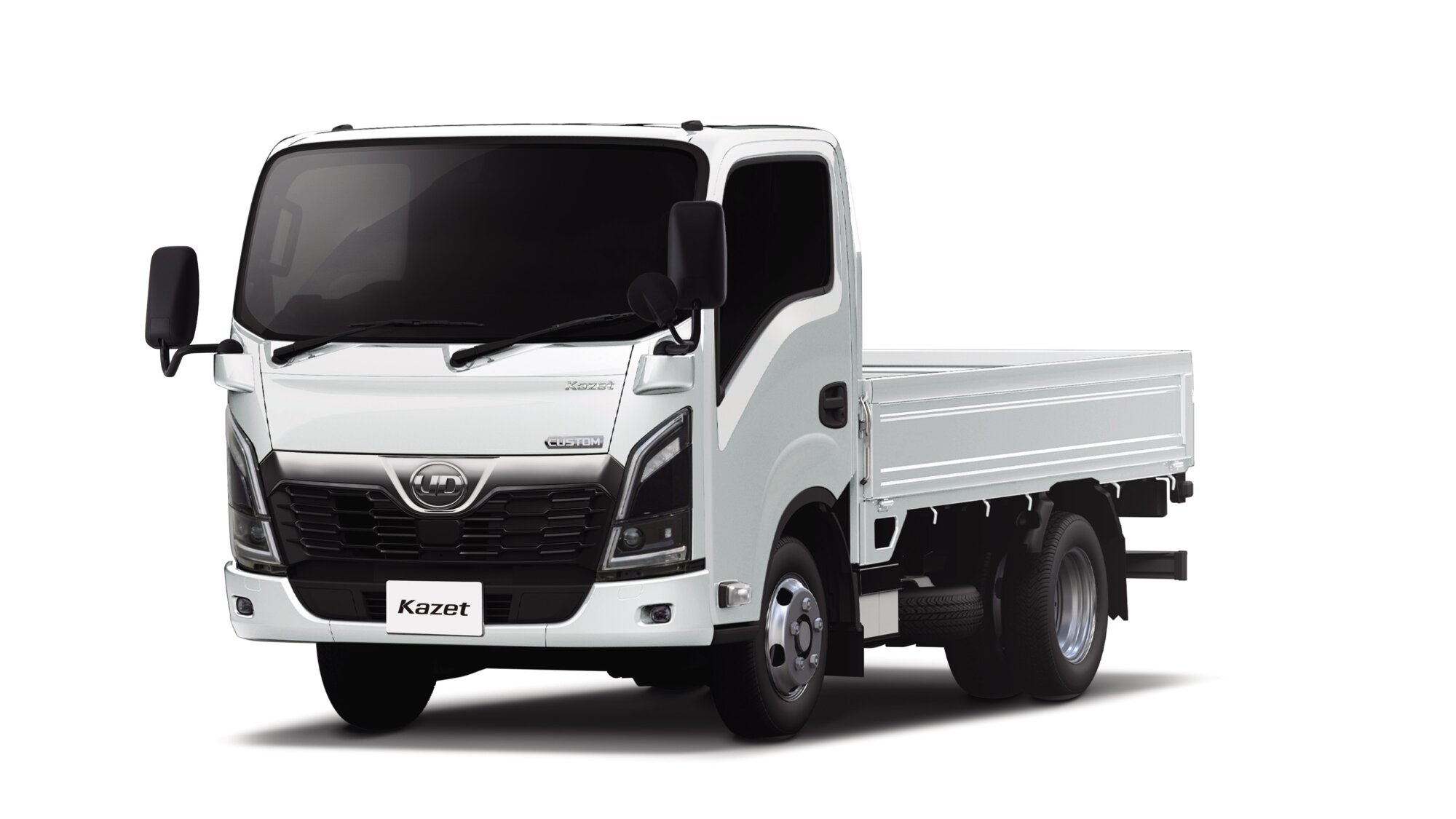
This article outlines how truck DCTs work, how they differ from AT, AMT, and MT, what benefits and trade-offs they offer, and what to consider when selecting and operating them over the long term. Using the example of UD Trucks’ light duty truck “Kazet,” it also explains the criteria for making an adoption decision.
A DCT is a transmission that significantly reduces torque interruption and shift shock by alternately switching between two clutches. By having two clutch systems inside, it can prepare the next shift in advance. This enables driving performance that is smoother than MT, which requires manual operation of gears and the clutch, and AT, which uses a torque converter for automatic shifting. Here, the definition of DCT and how it is referred to in the truck industry are explained.
A DCT is a transmission that combines the power transmission efficiency of an MT with the ease of operation of an AT. Its main feature is the use of two clutch systems, one for odd-numbered gears (1st, 3rd, 5th) and one for even-numbered gears (2nd, 4th, 6th). This structure makes it possible to anticipate and pre-engage the next gear while driving, then switch the clutch instantly, which greatly reduces torque interruptions during acceleration. In truck transportation, where preventing load shift is critical, this enables very smooth and efficient driving.
In the truck industry, the naming of DCT is not always unified due to manufacturers’ design concepts and marketing considerations. In principle it is called “DCT,” but in practice it is often grouped under the idea of automatic shifting, which leads to cases where DCT is confused with AMT. This stems from a broad understanding of MT-based transmissions with automatic shifting functions, but DCT and AMT are, strictly speaking, different systems.
AMT generally refers to a system based on the structure of an MT, with clutch operation and shifting automated. A DCT, by contrast, uses two sets of clutches to prepare the next gear in advance and shifts by switching clutches, which places it in a different category from AMT.
For that reason, even if the expression “DCT-type AMT” is used, it may remain only a convenient wording intended to make the concept easier to understand in the context of automatic shifting. When considering adoption, it is important not to judge only by the name or product brand, but to check the specifications and manufacturer materials to confirm whether the mechanism is DCT or AMT, then compare them based on the underlying system.

In addition to DCT, transmissions that affect truck driving performance and economics include AT, AMT, and MT. Since each differs in how power is transmitted and how shifts are controlled, it is important to compare them across multiple criteria, including shift speed, transmission efficiency in terms of fuel economy, operability, and maintenance cost, and to identify the system best suited to the company’s routes and work content. Here, the explanation focuses on differences in how power is connected and behavior at low speeds.
The major difference among DCT, AT, AMT, and MT lies in how engine power is transmitted to the wheels. Each system has its own mechanism, which directly affects driving feel and operability.
<How each system connects power>
・DCT: A system that uses two clutch systems, one for odd gears and one for even gears, to anticipate and switch to the next gear in advance. Continuity during acceleration is maintained. At the same time, in low-speed ranges, control characteristics tend to appear in vehicle behavior.
・AT (torque converter AT): Power is transmitted through a torque converter that uses fluid, which supports smooth starts and tends to provide stable handling at low speeds.
・AMT: Structurally close to an MT, with clutch operation and shifting automated. The feel during shifts varies depending on the accuracy of the vehicle’s control program.
・MT: The driver directly operates the clutch to transmit engine power. Operation requires more effort, but it supports driver-intended movements, including creeping and repeated maneuvering.
Understanding these differences in power transmission methods is a key point in selecting a vehicle that matches the intended use.
In situations that involve a long time spent moving slowly, including creeping, reversing, and repeated maneuvering, differences in how the clutch connects power appear clearly in actual behavior. This is because delicate control of power transmission is required at low speeds. Since DCT and AMT transmit power through fine clutch control at low speeds, certain driving situations can result in a sense of hesitation or unfamiliar behavior.
By contrast, AT, which transmits power through a torque converter, tends to provide more creep at low speeds and more stable control in extremely low-speed ranges. In this way, ease of handling at low speeds is not determined only by the transmission type itself. It is determined by the compatibility between the vehicle’s control design and actual operating conditions, including the frequency of yard work.
Adopting DCT for trucks brings benefits in multiple areas, including improved transport quality, reduced operating costs, and reduced driver burden.
One of the greatest advantages is the significant reduction in shift shock. Since two clutches transmit power without interruption, there is no torque drop during acceleration. This supports transport operations that require careful attention to load stability, including precision machinery and delicate cargo.
Another attraction is fuel efficiency. Unlike AT, which uses fluid, a DCT connects power directly through clutches, which reduces transmission losses and supports efficient driving close to that of an MT.
In addition, by being freed from complex clutch operations, driver fatigue caused by frequent stop-and-go in congestion and urban areas is reduced, which supports maintaining concentration during long operating hours.
When adopting DCT, it is necessary to understand not only the benefits but also the operational points to note. First, because a DCT has a complex internal structure, the unit itself tends to be heavier than a conventional MT. Depending on the vehicle specification, this increase in unit weight can affect payload conditions. For operations that prioritize loading efficiency, this should be confirmed in advance.
It is also important to confirm behavior at low speeds. A DCT has distinctive characteristics during creeping operations, including reversing and repeated maneuvering in confined spaces. Experienced drivers who are accustomed to delicate control in MT vehicles may feel a difference. In addition, in the event of a failure, partial repairs are difficult, and replacement of the assembly as a whole is often required. This means there is a potential risk of higher repair costs, which should be taken into account when evaluating total operating costs.
Next, this section explains the history of DCT technology development in Europe and Japan and the state of its adoption.
In Europe, advancement of DCT technology has proceeded with the aim of improving driving efficiency of heavy duty trucks and reducing driver burden. From 2014, an initiative began to apply DCT technology, which had previously been common in sports cars, to heavy duty trucks. This achieved efficient power transmission using two input shafts and two clutches.
In Europe, AMT with automated clutch operation was introduced to heavy duty trucks from the early 2000s, and a DCT version appeared as an advanced form of that development. These systems have achieved cumulative worldwide sales exceeding one million units, and in long-haul operations their reliability and shift continuity have been highly regarded. By building up results under harsh operating environments, DCT has been established as an effective transmission for heavy vehicles.
In Japan, DCT development for light duty trucks has followed its own path in order to optimize deliveries in urban areas, where traffic signals and congestion cause repeated stop-and-go driving. In 2010, the world’s first DCT for a light duty truck was put into practical use, marking a turning point at which the convenience of automated clutch operation became widely recognized. In 2023, a model equipped with a 9-speed DCT was introduced. Through further increases in the number of gears, the pursuit of both fuel efficiency and stable acceleration performance continues.
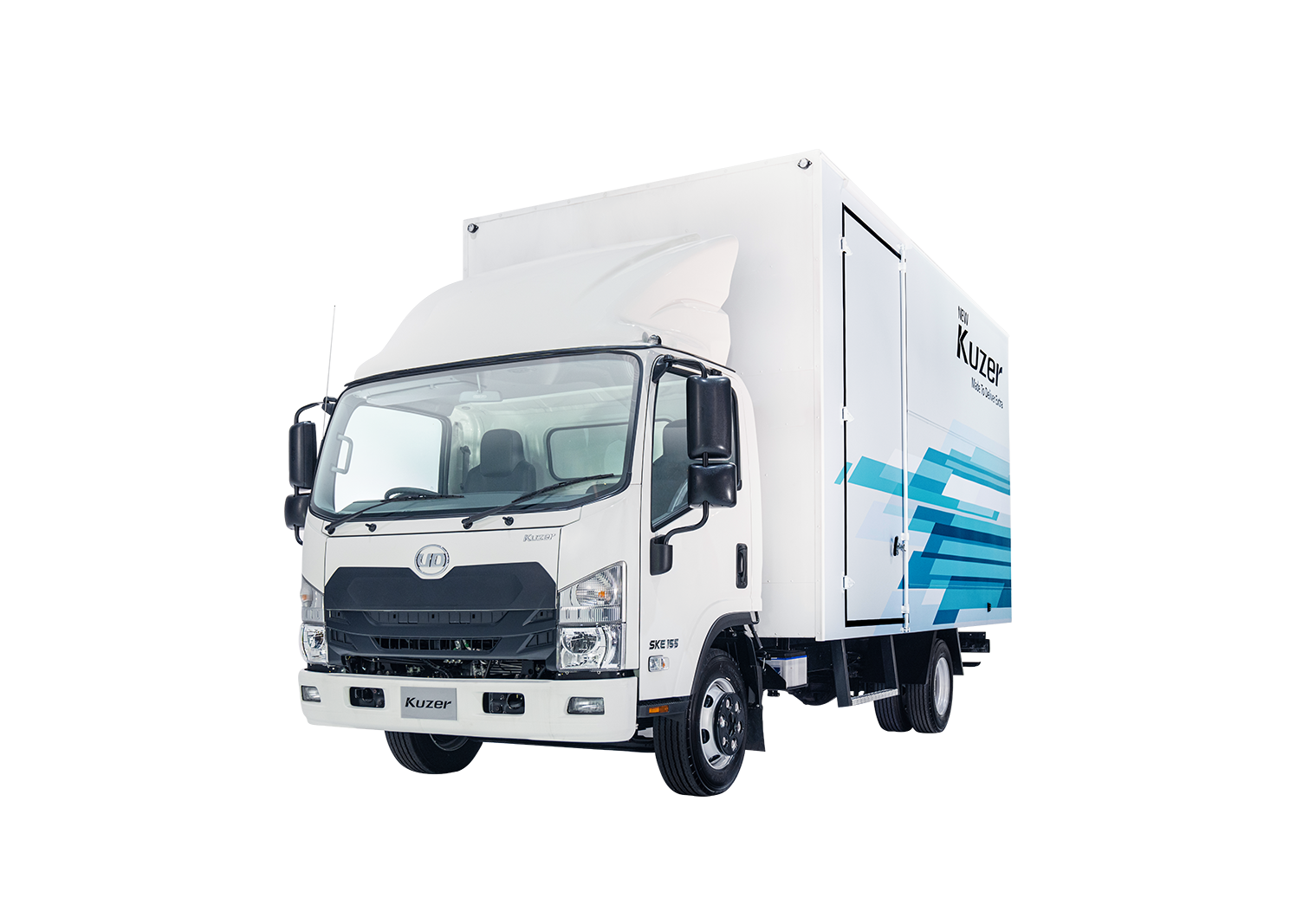
This DCT technology is also adopted in UD Trucks’ light duty truck “Kazet,” supporting ease of use in the field and economical operation.
For details, please see the product page for “Kazet.”
When judging whether DCT is optimal for a company’s operations, compatibility with specific operating scenes is important. In operations that involve frequent stopping and starting, including urban driving, the strength of DCT, which does not require clutch operation, supports reduced driver fatigue and consistent acceleration.
On the other hand, in worksites where creeping, reversing, and repeated maneuvering in yards occur continuously, there is a distinctive feel in low-speed behavior. For this reason, prior test drives and checks that assume actual operations are essential. DCT also supports selection for long-distance and high-speed driving from the viewpoints of fuel economy and drivability, but final efficiency is influenced by vehicle specifications and conditions. When adopting, rather than deciding only by the transmission type, it is effective to review factors including the number of stops, the ratio of creeping work, gradients, payload, and driver composition, and to compare options including AT and AMT.
To maintain the driving performance of DCT-equipped trucks, prevent problems in advance, and use them over a long period, there are three operational tips to keep in mind.
The first is driving operation that avoids forcing the clutch into a half-engaged state. In particular, when starting or stopping on slopes, drivers should use the vehicle’s brake hold function and avoid placing excessive load on the clutch.
The second is transmission oil management. Since a DCT performs precise hydraulic control, oil changes at the mileage specified by the manufacturer have a major impact on the service life of the unit.
The third is use of diagnostic equipment. If even a slight delay in shifting or a sense of abnormal behavior is noticed, it is necessary not to leave it unattended and to have it checked at a dealer as early as possible in order to prevent serious failures.
A truck DCT is a transmission that supports continuity during acceleration and suppression of shift shock by anticipating shifts with two clutches. When considering adoption, decision-makers should first understand the differences in power transmission and low-speed behavior compared with AT, AMT, and MT, and then assess how well each option matches their operating conditions, including the number of stops and the frequency of creeping and maneuvering.
In addition, in order to continue using a DCT-equipped truck in optimal condition over the long term, operational design is essential. This includes handling at low speeds that avoids forcing the clutch into a half-engaged state, thorough management of the specified transmission oil, and early diagnosis that does not overlook even slight abnormalities. Based on the benefits and points to note outlined in this article, these considerations should be used as a basis for selecting the vehicle that best matches on-site needs.